Mou Group: Shancong (Sean) Mou, University of Minnesota
The Mou Group develops learning, optimization and computational methods for complex engineering systems, with the goal of improving their quality, productivity and efficiency. Our work draws on modern machine learning (modeling), large-scale optimization (algorithms) and computational science (efficient implementation), with applications in vision-based industrial inspection, advanced manufacturing, energy systems and more.
For practitioners: our work is industrial and physical AI, that is, AI that understands and improves real machines, plants and energy systems. It rests on three parts that need one another. Machine learning gives us a good model of the system. Optimization is the next stage: once the model is good, it finds the best designs, operating settings and controls. Efficient algorithms and computation then bring these advances into the real world, at the speed and scale that deployment demands.
Openings
We are recruiting Ph.D. students
Agentic AI for industrial inspection and quality control in advanced manufacturing, as part of our NSF-funded Data-Agent project, co-advised by Prof. Shancong (Sean) Mou (ISyE) and Prof. Zirui Liu (CS).
We are also open to strong candidates with a solid numerical or mathematical background (for example, numerical analysis, PDEs or scientific computing) to work on physics-informed learning and large-scale optimization.
A few current student projects can be found on the People page.
Students in statistics, mathematics, computer science, engineering or related majors with proficient coding skills are welcome to apply. Please email Prof. Shancong (Sean) Mou at mou00006@umn.edu with your CV, plus transcripts or sample publications if available. Current UMN students and remote research assistants are also welcome to reach out.
Supported by
News
Sep 2026Talk
Visited Samsung Electronics to give an invited talk on our GRO project: “AI/ML Modeling + Large-scale Optimization for Large-scale Complex Engineering Systems.”
Xinhan Yang won the 2026–27 Robert E. Greiling, Jr. Scholarship for Graduate Studies in Renewable Energy.
Zhiping Li was named runner-up for the INFORMS Computing Society Student Paper Award.
Sylvia Liu won an Undergraduate Research Opportunities Program (UROP) Award.
Deyi Kong won the 2026 General Education Endowment Scholarship from the International Society of Automation (ISA).
Jul 2026Funding
Our group received an NSF award (#2608818, lead PI: Shancong (Sean) Mou) for Data Agent: autonomous data quality evaluation, curation and task-aware dataset design for vision-based industrial inspection.NSF Data Agent project: dataset screening, curation and task-aware design.
Jul 2026Paper
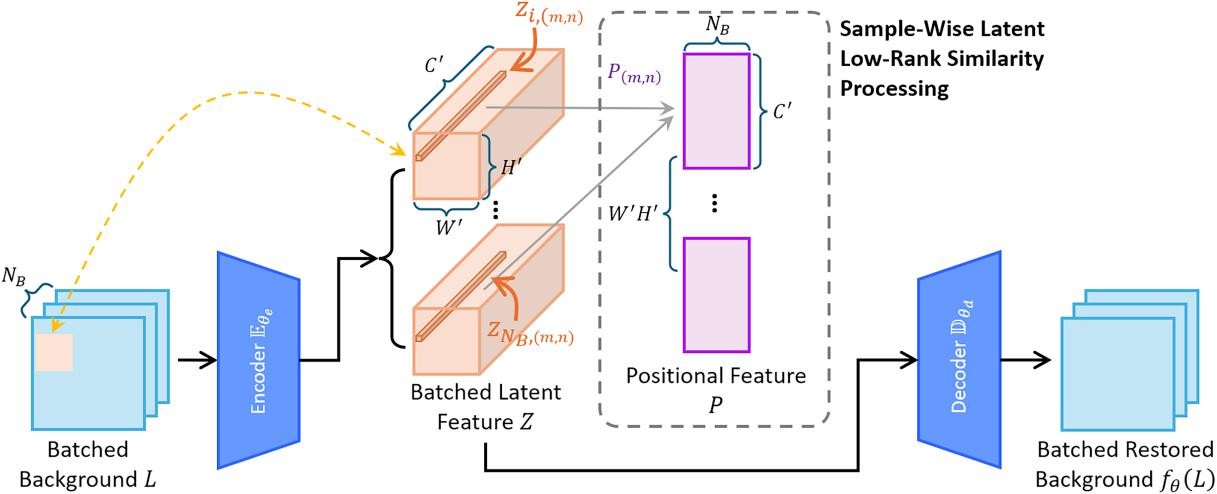
New paper accepted by the INFORMS Journal on Data Science: “DISCO: Disentangling Signal Restoration and Corruption Identification via Sample-Wise Latent Low-Rank Similarity.” Paper Congratulations, Yifeng!DISCO’s autoencoder with sample-wise latent low-rank similarity (Wang et al., 2026).
Jun 2026Funding
An unrestricted gift from NVIDIA supports our research on HVAC system modeling and optimization. Many thanks to the NVIDIA Academic Grant Program!
Jun 2026Paper
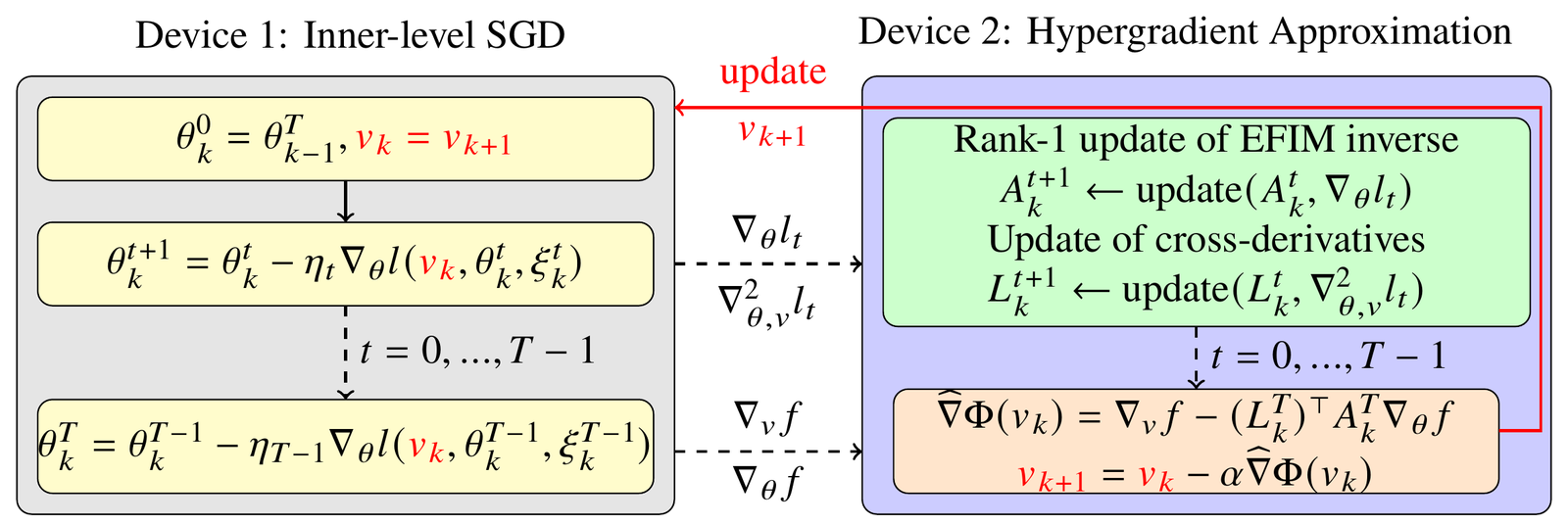
New paper accepted at ICML 2026: “Natural Hypergradient Descent: Algorithm Design, Convergence Analysis, and Parallel Implementation.” arXiv Congratulations, Deyi!NHGD’s parallel design: inner-level SGD on one device, synchronous hypergradient approximation on another (Kong et al., 2026).




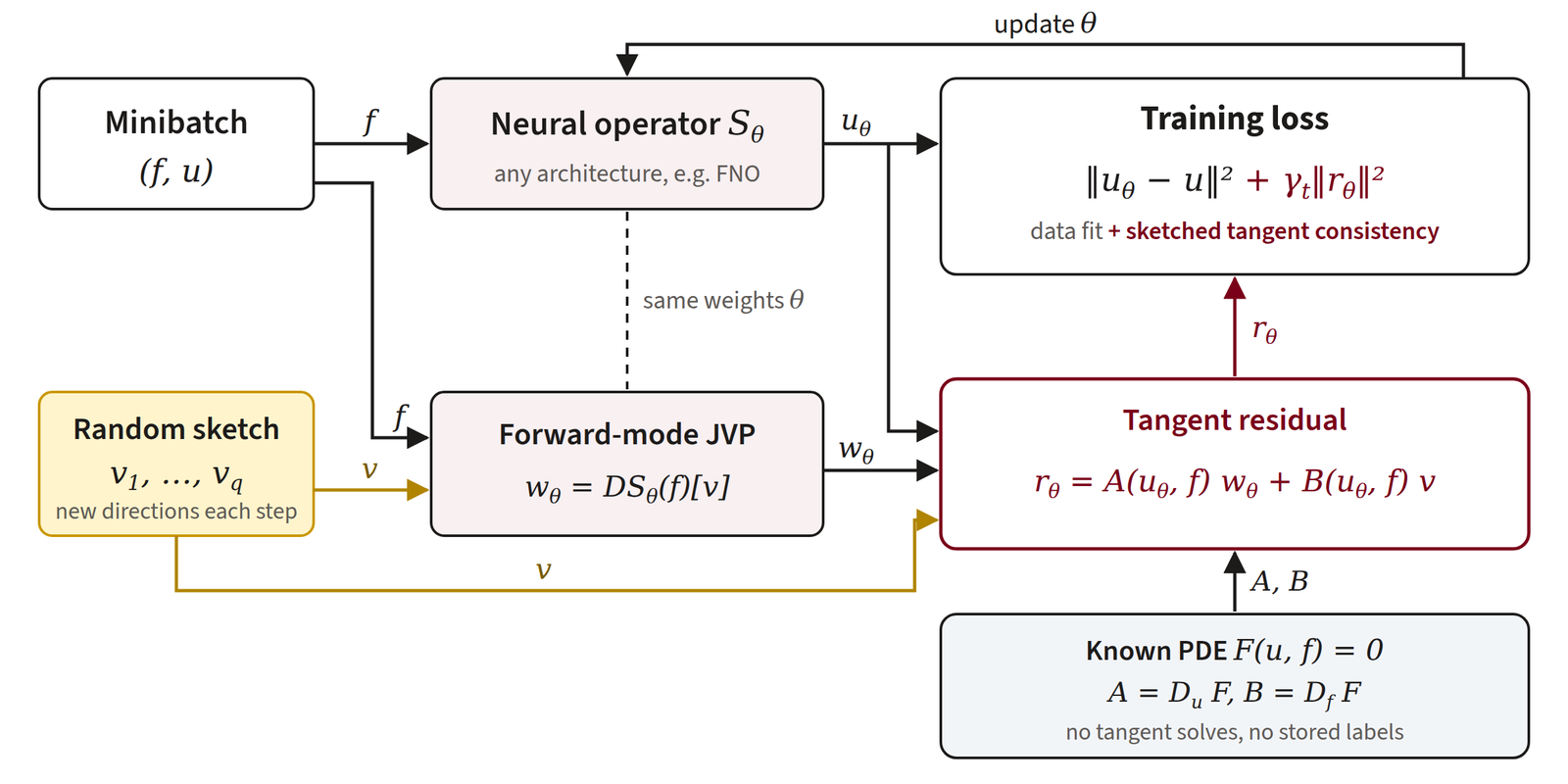
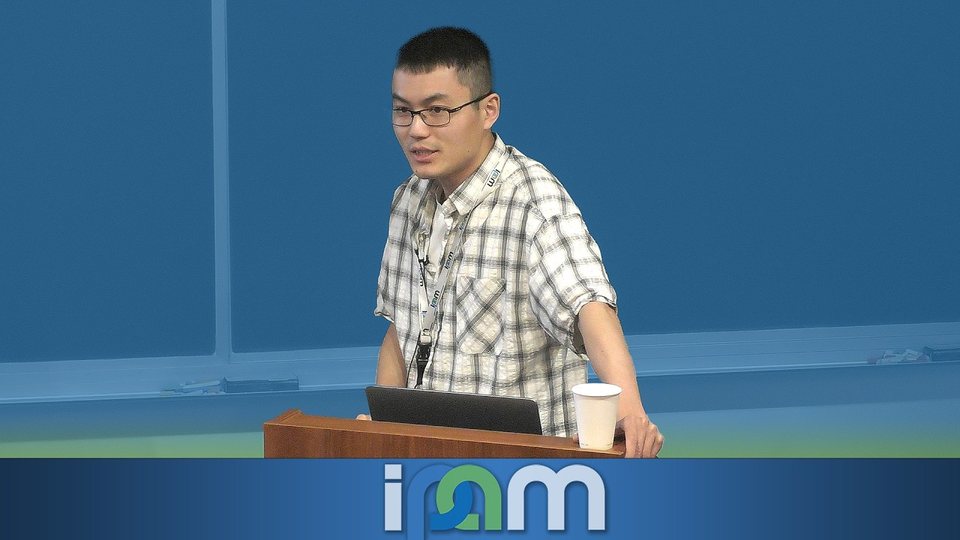 Video · mathinstitutes.orgShancong Mou - Derivative-Informed Training of Neural Operators on the FlyIPAM, May 22, 2026 · Workshop IV: Multi-Fidelity Methods to Enable Robust Optimization and Real-Time Control of Fusion Processes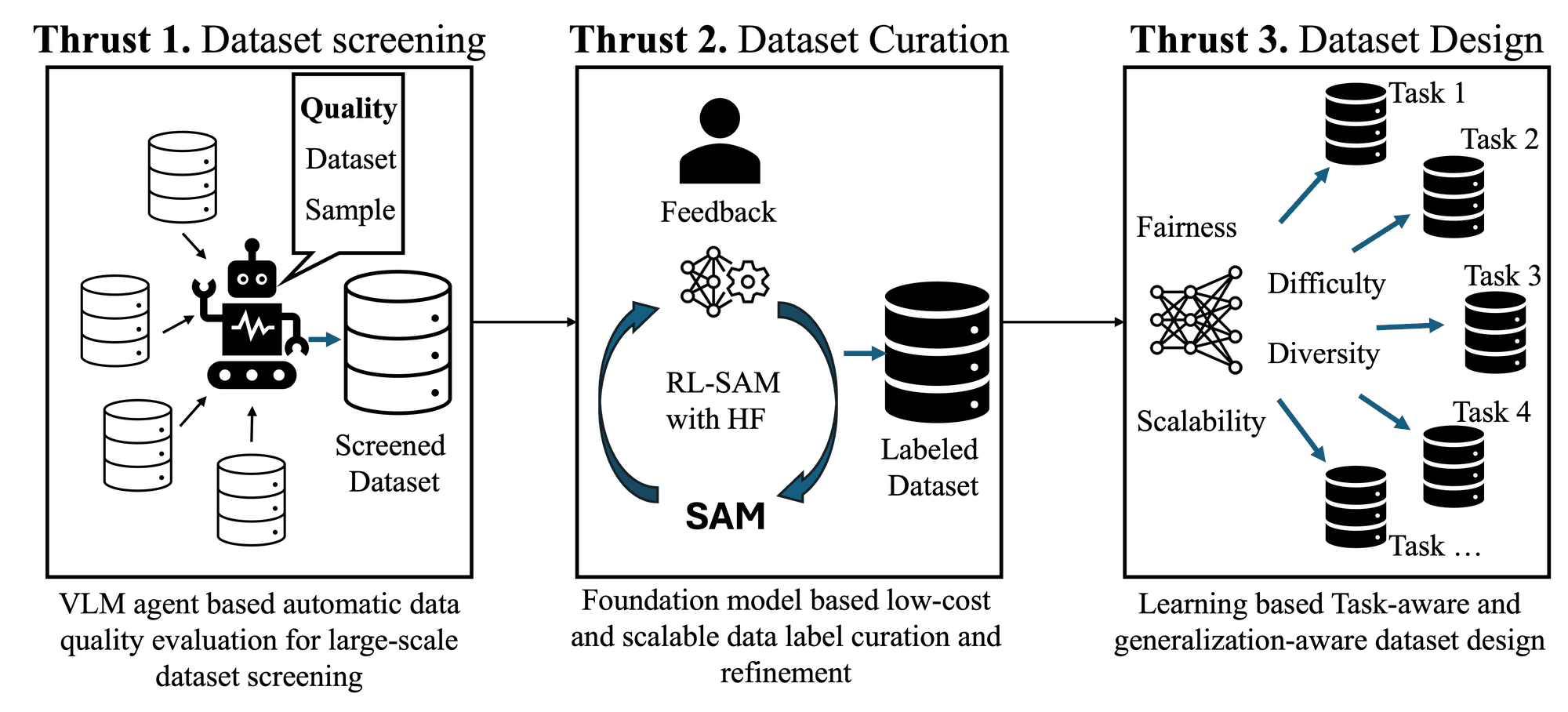
 vision-workshop-26.github.io4th Workshop on Vision-based InduStrial InspectiON (VISION) @ CVPR 2026Vision-Based Industrial Inspection Across Modalities (Surface, X-ray, 3D & More). Denver, Colorado.